01
A senior review for every client
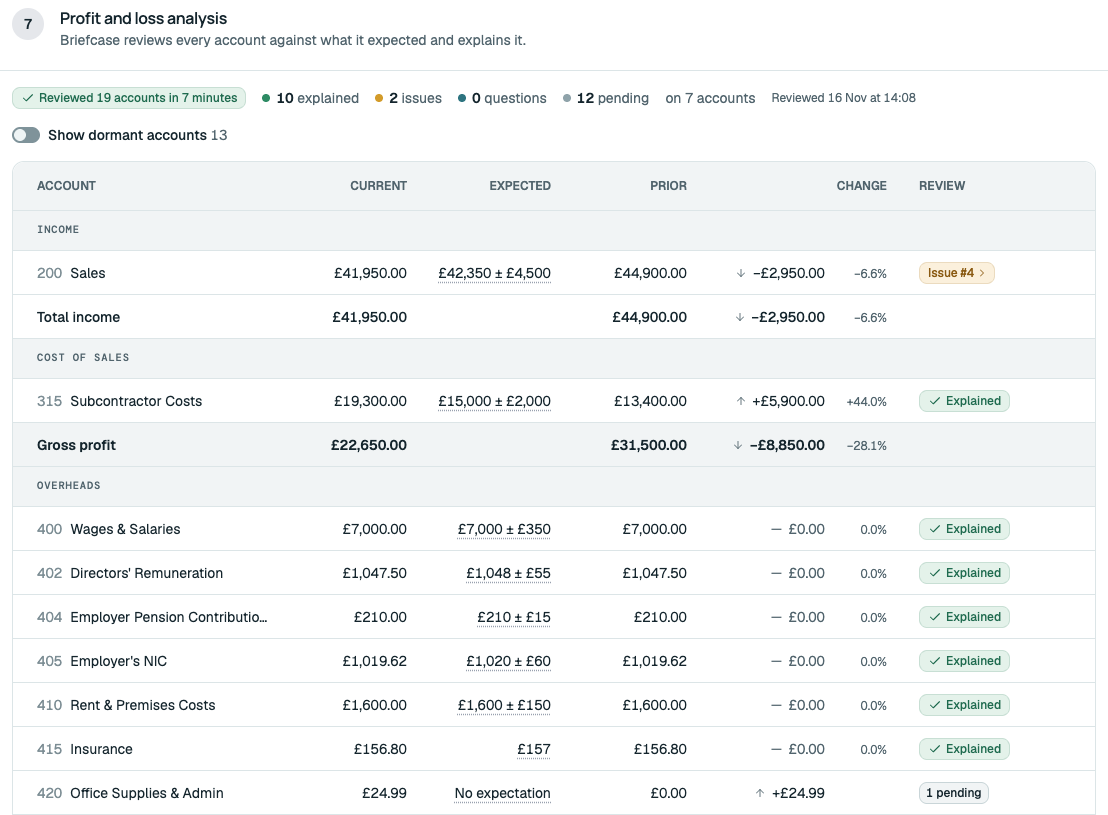
Most firms give their biggest clients a proper review and the rest a quick skim, because review falls to the few most senior people. Agentic Review gives every Briefcase Ledger client the full review, every month.
It's live for every Ledger business from 12 November. Open a new set of working papers and it starts on its own, as the Profit and loss analysis section. Introducing Agentic Review tells the full story.
02
How it reviews
- It sets expectations. Before it looks at the month, an agent predicts what every profit and loss account should be from the last twelve months, with a range and a reason. For a client that moved to Ledger recently, it works from the imported trial balance.
- It investigates the gaps. Where an account falls outside its range, investigator agents query the transactions, read the documents and check the bank until they know what happened.
- It argues with itself. Every finding goes to a second agent whose only job is to knock it down. If the evidence doesn't hold, you never see it.
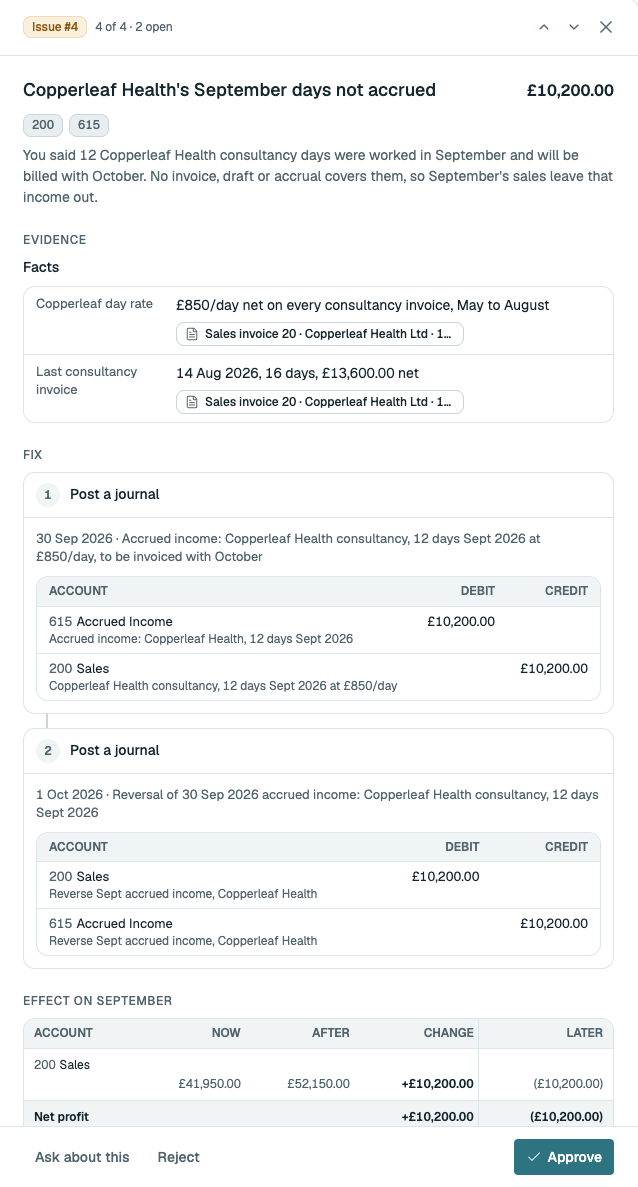
- It prepares the fix. A recode, a void, a prepayment, an accrual or a journal, each tested against the books before it reaches you.
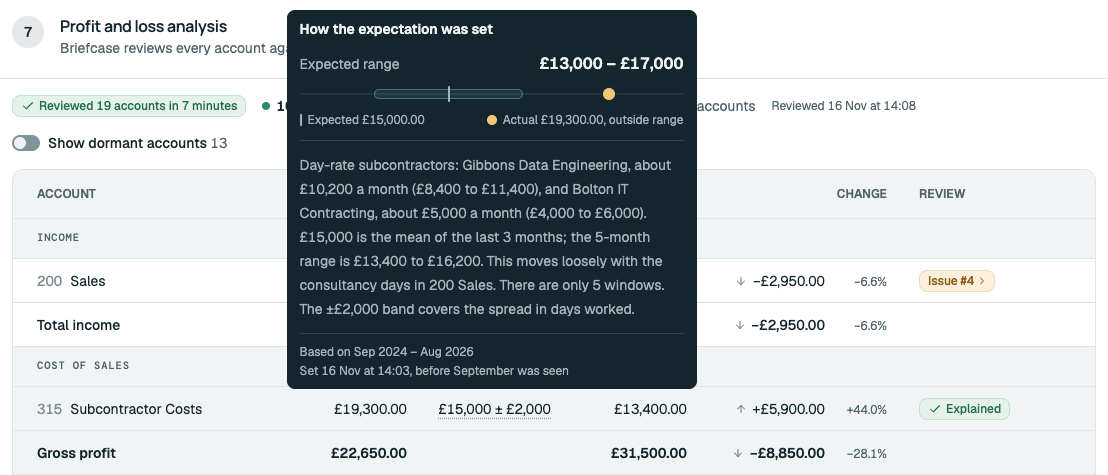
When it finishes, every account on the profit and loss has an explanation next to it. Most say the number is in line and why. The handful that aren't each carry a review point.
03
Three ways a review point ends
- An issue with the fix ready, when Briefcase knows what went wrong. Say software costs are nearly double what was expected: it finds the same invoice posted twice, shows you both copies and has the duplicate ready to void. A platform payout posted net can be recoded as gross sales less the fee.
- A document request, when the paperwork is missing. Briefcase drafts the request to the client and links whatever they upload to the payment. If you don't need it, dismiss it with a reason.
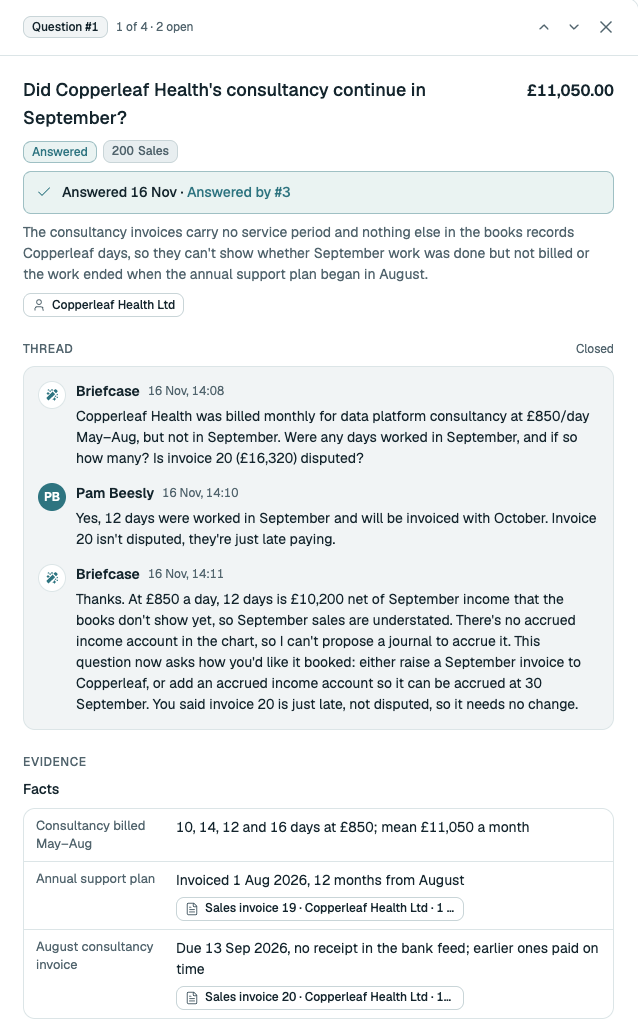
- A question, when only you know the answer. Say a customer you invoice every month has no invoice this month: the books can't tell whether the work stopped, so it asks. Answer in your own words and Briefcase drafts what follows.
04
You approve every change
Agentic Review won't change the ledger until you approve a fix. Reply on any review point to ask why it was raised or say what you'd do instead, and Briefcase answers in the thread. If you disagree, reject it with a reason, and Briefcase remembers your answer in the next review.
Open review points also show on the records they're about, whether a bill, sales invoice, journal, prepayment, deferred income, fixed asset, accrual or expense claim, so you can act on them there or open them in the working paper.
05
It keeps up with the books
Change something in the books and Agentic Review looks again at just the accounts that moved, with a banner while it catches up. Explanations that cite a changed record are rewritten, and a point that no longer applies is withdrawn or replaced.
06
Closing the period
A period can't be closed while the review has open points or is still catching up with a change, and the close panel links each one to what clears it. Document requests already with the client don't hold up the close: you acknowledge them when you close.
The closed review is kept as it stood, read-only, and flags anything that changed after the close. Reopen the period and the review picks up where it left off. The working paper export includes the review and its points, and each account has an audit trail of every step.